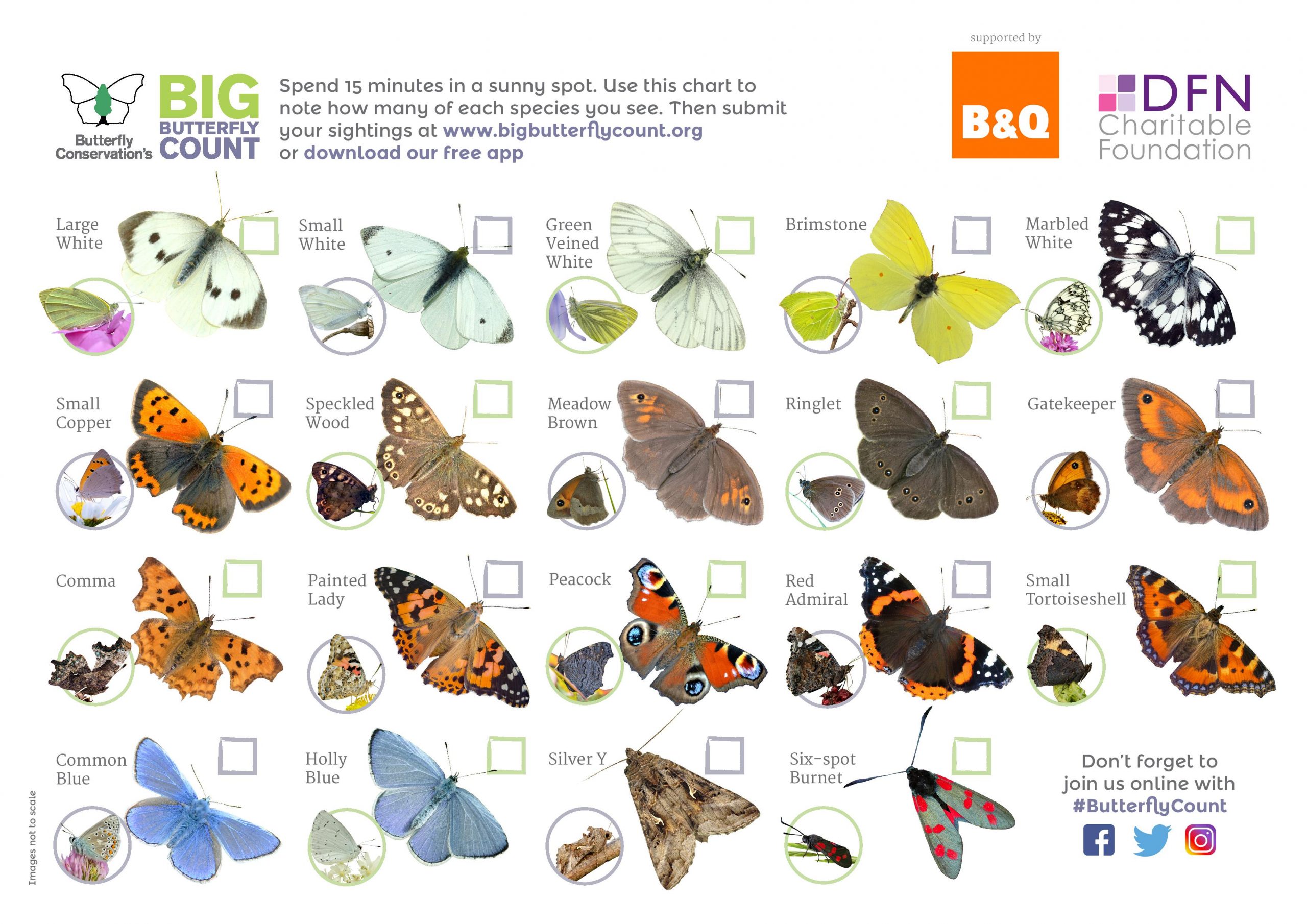
15 July – 7 August 2025
It’s time to grab your sun hat, step outside, and take part in one of the UK’s biggest citizen science projects — The Big Butterfly Count!
Whether you’re in a garden, park, field, or even your balcony, spend just 15 minutes recording butterflies and moths you spot. It’s fun, free, and helps monitor the health of our environment.
Why it matters:
Butterflies and moths are not only beautiful — they’re essential pollinators and indicators of biodiversity and climate health. By counting them, you help conservation scientists track trends and protect nature.
What Butterflies and Moths Can You See Now?
Here are just a few common species fluttering around this time of year:
Butterflies
Peacock – Striking eyespots and vibrant colour, often seen basking in the sun.
Red Admiral – Bold black with red bands and white spots. Loves garden flowers.
Small Tortoiseshell – Orange and black with blue edging, often spotted on buddleia.
Gatekeeper – Orange and brown, often found in hedgerows and meadows.
Comma – Ragged wing edges and rich orange colour with dark markings.
Common Blue – Delicate and bright blue (males); greyish-brown (females).
Day-flying Moths
Six-spot Burnet – Metallic black wings with red spots. Often mistaken for a butterfly.
Cinnabar – Bright red and black, usually found on ragwort.
Silver Y – Fast-flying and shimmery, seen in gardens and fields.
How to Take Part:
Download the free app or use the official ID guide.
Choose a spot and count for 15 minutes.
Submit your sightings via the app or website.
Every count matters! Let’s help protect our butterflies and moths — for now and for future generations.