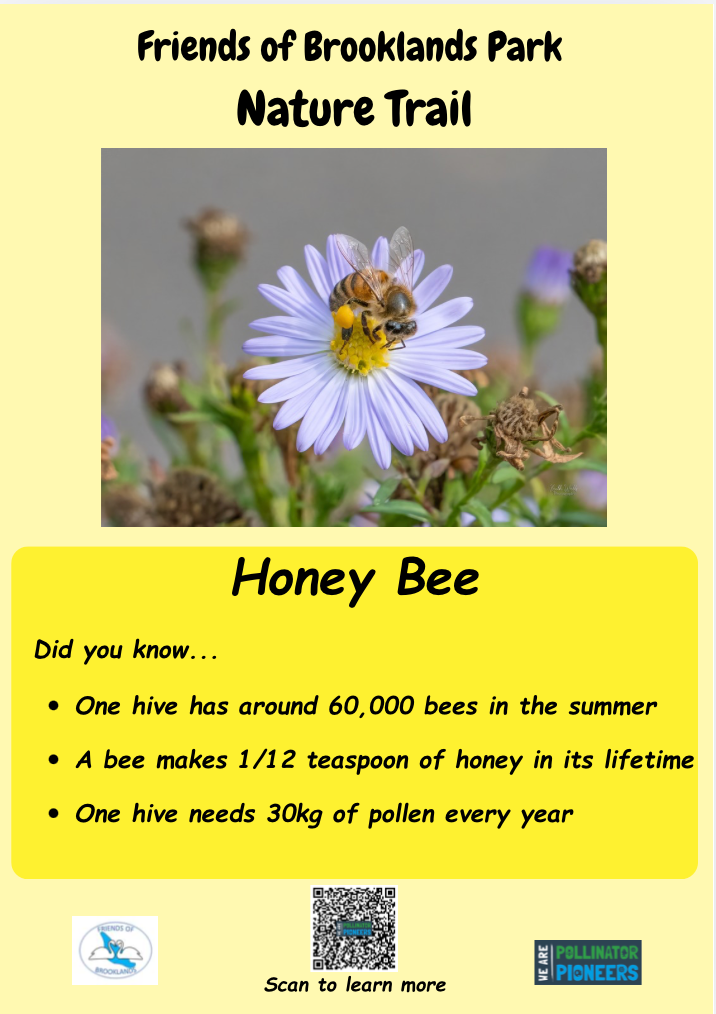
As we prepare to change our Nature Trail plaques over to the Autumn/Winter wildlife collection, we’re shining a spotlight on some of the wonderful wildlife featured on our current trail!
This time, it’s the amazing Honeybee!
These incredible little pollinators have been busy throughout spring and summer, collecting nectar and pollen, producing honey and helping support the plants and wildlife around us.
Did you know Brooklands Park is home to one of our apiaries, managed by We Are Pollinator Pioneers CIC? We also have an apiary at Worthing Leisure Centre, and what a busy season it’s been at both sites!
DID YOU KNOW?
A lifetime of work! A single worker honeybee produces only around 1/12 of a teaspoon of honey during her lifetime!
The waggle dance! Honeybees communicate through a fascinating dance that tells other bees the direction and distance of a good food source.
Busy little workers! A honeybee can visit hundreds or even thousands of flowers in a single day.
A royal family! At the height of summer, a healthy colony can contain up to 60,000 bees, usually with just one queen!
OUR 2026 BEEKEEPING SEASON – WHAT A YEAR!
We’ve had a fantastic season at both our Brooklands Park and Worthing Leisure Centre apiaries!
With the mild winter and early warm spring weather, our bees got off to a flying start, and swarm season arrived earlier than usual!
Brooklands Park: We started the season with just 4 hives and are heading into winter with an amazing 9 hives!
Worthing Leisure Centre: Another good season and are going into winter with 5 hives.
Much of this increase came from splitting strong colonies to help prevent swarming, although we also had a cheeky couple of cast swarms keeping our beekeepers on their toes!
A BUMPER HONEY SEASON!
The long, sunny summer meant our bees were incredibly productive, allowing us to harvest honey twice at both apiaries – our first extraction in June and a second in August.
Despite the summer heatwaves, our bees coped remarkably well. We helped them by ensuring their hive entrances were fully open for ventilation and that water was available nearby for them to collect and help cool their hives.
And don’t worry, the bees haven’t been left short! All our colonies have plenty of their own honey stored away to help see them safely through winter. 💚
Fancy trying some Brooklands honey? Our delicious, locally produced honey is available to buy at Brooklands Café!
WHAT HAPPENS TO HONEYBEES IN WINTER?
Unlike many other insects, honeybees don’t hibernate – they stay awake throughout winter!
As temperatures drop, the bees gather together inside their hive, forming a tight winter cluster around their queen. By vibrating their flight muscles, they generate warmth and keep the colony alive, even when it’s freezing outside.
They slowly work their way through the honey they’ve stored during summer, using it as fuel to keep warm until spring.
And here’s another amazing fact – while summer worker bees usually live for around six weeks, winter bees can survive for several months!
On milder, sunny winter days, you might still spot honeybees out flying, taking cleansing flights or visiting winter-flowering plants.
Our beekeeping team will now leave the colonies largely undisturbed, monitoring their hives and food stores throughout the colder months.
HOW CAN YOU HELP?
Plant winter and early spring flowers to provide valuable nectar and pollen.
Leave some areas of your garden undisturbed to shelter overwintering insects.
Avoid pesticides and make space for wildflowers.
Provide a shallow water source with safe landing places for insects.
DISCOVER MORE!
Next time you’re visiting Brooklands Park, look out for our Honeybee Nature Trail plaque and scan the QR code to discover more fascinating facts about these amazing pollinators on our Nature Trail page on our website.
Our Autumn/Winter Nature Trail plaques will be appearing soon, showcasing a whole new selection of wildlife to discover!