A Winter Lifeline for Pollinators and Wildlife
As autumn turns to winter and many of our garden flowers begin to fade, one remarkable plant is just coming into its own – Mahonia!
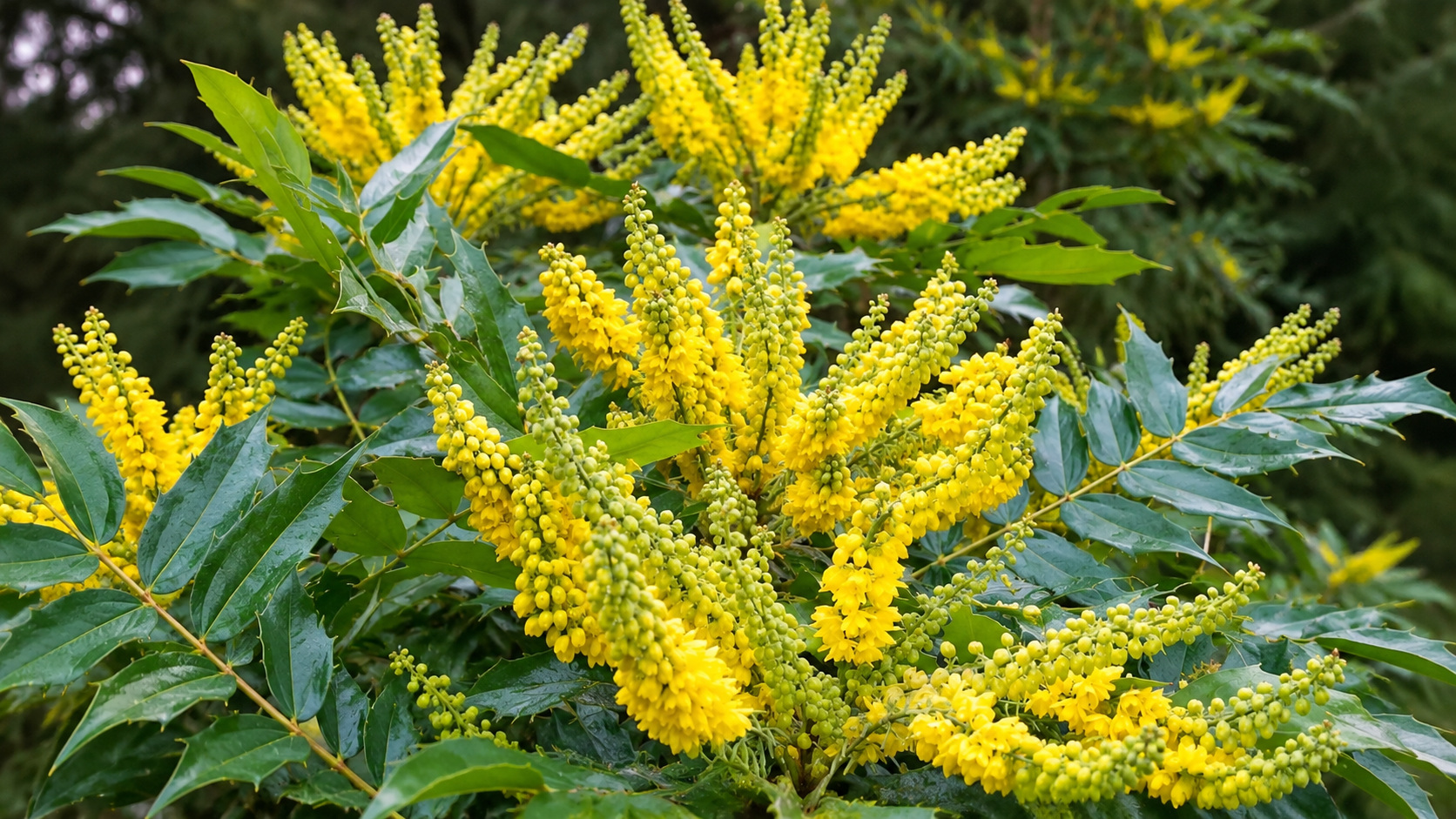
With its beautiful clusters of bright yellow flowers, glossy evergreen leaves and wonderfully sweet fragrance, Mahonia brings a welcome splash of colour to gardens and green spaces during the colder months. But Mahonia is much more than just an attractive winter-flowering shrub. It provides an important source of food and shelter for wildlife at a time of year when natural resources can be scarce.
Mahonia is a familiar sight in gardens, parks and landscaped spaces across Sussex. Although not native to Britain, this hardy evergreen shrub thrives in our relatively mild coastal climate and is well suited to gardens along the Sussex coast. It has become a valuable addition to wildlife-friendly gardens, particularly during the colder months when nectar and pollen can be difficult for pollinators to find.
Why Is Mahonia So Important for Pollinators?
Most flowering plants have finished blooming by November, leaving very little nectar and pollen available for insects still active during milder weather.
This is where Mahonia really shines!
Depending on the variety, Mahonia can flower from late autumn right through winter and into early spring, providing a valuable food source when few other flowers are available. Its bright yellow flowers are rich in nectar and also offer pollen, attracting insects that venture out on warmer winter days.
Mahonia is particularly valuable for:
- Bumblebees – Some bumblebee queens and, increasingly in milder areas, winter-active colonies may visit Mahonia flowers for nectar and pollen.
- Honeybees – On mild, sunny winter days, honeybees may leave their hives to forage, taking advantage of Mahonia’s flowers.
- Hoverflies – Some adult hoverflies remain active during mild autumn and winter weather and can feed on the nectar.
- Other overwintering insects – Insects active during warmer spells may also benefit from its flowers.
For pollinators emerging during an unexpected warm spell, finding a flowering Mahonia can provide a welcome energy boost.
More Than Just Flowers – Benefits for Birds and Other Wildlife
Mahonia’s wildlife value doesn’t end when its flowers fade! Following flowering, many varieties develop clusters of blue-black berries, which can provide food for birds later in the year.
Blackbirds, thrushes and other fruit-eating birds may take advantage of these berries when they are ripe.
Its dense evergreen foliage also provides valuable shelter for small birds and insects, offering protection from cold winds, rain and predators.
This makes Mahonia a useful addition to a wildlife-friendly garden throughout the year.
A Beautiful and Hardy Winter Shrub
Mahonia is an evergreen shrub with distinctive, often prickly, holly-like leaves and clusters of golden-yellow flowers.
Many varieties have a lovely sweet fragrance, sometimes compared to lily of the valley, which can be particularly noticeable on a mild winter day.
Mahonia is also a hardy and relatively low-maintenance plant, making it an excellent choice for gardeners who want to support wildlife without needing a great deal of upkeep.
Different varieties flower at different times. Some begin in October or November, while others flower later in winter or early spring.
What Can You Do to Help?
Adding winter-flowering plants to your garden is one of the simplest ways to support pollinators during the colder months.
Here are a few ways you can help:
- Plant a winter-flowering Mahonia – Choose a variety that flowers from late autumn into winter to provide nectar and pollen when other flowers are scarce.
- Create a year-round flowering garden – Combine Mahonia with snowdrops, hellebores, crocuses and other seasonal flowers to provide food across the year.
- Leave some areas undisturbed – Leaf litter, hollow stems and sheltered corners provide important overwintering habitats for insects.
- Let the berries develop – Avoid removing spent flower clusters if you want birds to benefit from the berries.
- Avoid pesticides – Protect visiting pollinators and other beneficial insects by gardening without harmful insecticides.
Even one winter-flowering shrub can make a difference, particularly in gardens where little else is blooming.
Did You Know? Fascinating Mahonia Facts!
A Winter Surprise! – Some Mahonia varieties flower during November, December and January, making them among the most useful winter-flowering garden shrubs.
Winter Visitors! – Honeybees do not hibernate. They remain inside their hive in a winter cluster but may fly out to forage when temperatures and conditions are suitable.
Holly Lookalike! – Mahonia’s prickly evergreen leaves resemble holly, although the two plants are not closely related.
Grape-Like Berries! – Mahonia is sometimes called Oregon grape because certain species produce clusters of dark berries resembling small grapes.
From Across the World! – Different Mahonia species originate from parts of Asia and North and Central America. Many are now popular ornamental shrubs in British gardens.
A Little Winter Colour That Makes a Big Difference
As we head into the colder months, it’s easy to think that our gardens have little to offer wildlife. But plants like Mahonia remind us that nature continues to provide food and shelter throughout the year.
By choosing plants that flower across different seasons, we can help create gardens and green spaces that support pollinators, birds and other wildlife all year round.
So next time you spot a Mahonia covered in golden-yellow flowers, take a closer look – you might just see a hungry winter pollinator enjoying a much-needed meal!