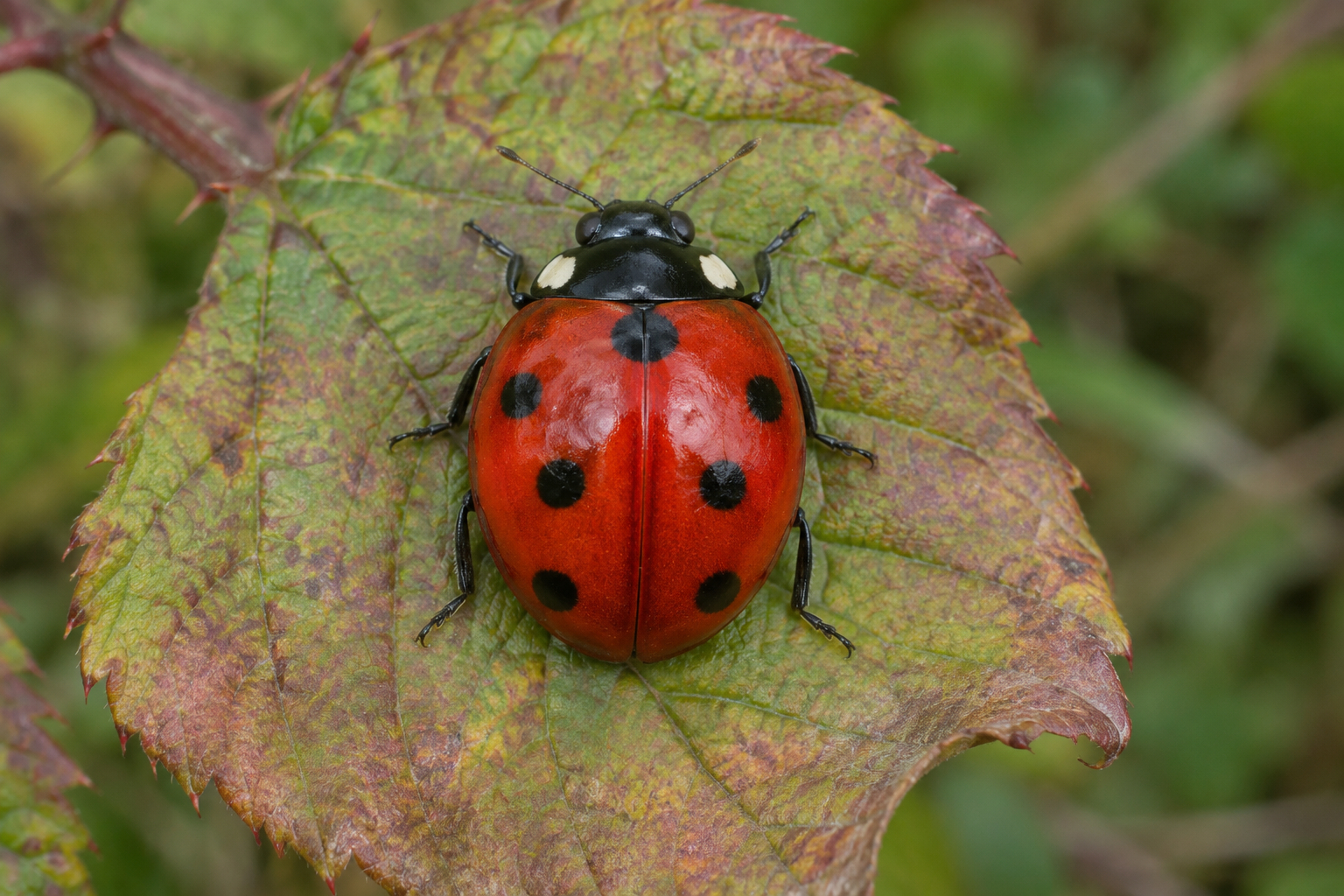
With its glossy red wing cases and seven black spots, the 7-spot ladybird is one of the easiest insects to recognise on the Brooklands Park Nature Trail. This tiny beetle is a familiar sight in the warmer months, but where does it go when the weather turns cold? It may be closer than you think, tucked inside a curled leaf or hidden among the plants at your feet.
Scientific name Coccinella septempunctata
When and where to see it
7-spot ladybirds are usually active from March to October and are common across the UK. At Brooklands Park, look along sunny path edges and check low-growing plants, wildflowers and shrubs. If you spot a cluster of greenfly or blackfly, take a closer look. A ladybird or one of its larvae may be hunting nearby.
How to recognise a 7-spot ladybird
The adult is around 5–8 mm long, with a rounded body, black legs and white patches near its head. Count three black spots on each red wing case and one shared spot where the two wing cases meet.
The larva looks like a tiny alligator, with a long, dark, spiky body and orange markings. You might see one crawling over a leaf in search of aphids.
Why ladybirds are good for your garden
Both adults and larvae eat aphids, including greenfly and blackfly. By feeding on these sap-sucking insects, ladybirds help keep aphid numbers in check. Females lay clusters of eggs near aphid colonies, giving the newly hatched larvae a ready supply of food. Once fully grown, the larva forms a pupa, from which the adult beetle emerges.
Where do 7-spot ladybirds go over winter?
7-spot ladybirds spend the winter as adults, tucked away in sheltered spots. They can hide among low-growing plants, inside curled dead leaves or hollow stems, and among the foliage of gorse and conifers. In autumn, they can also be found sheltering in old seed heads such as teasel. Sometimes several gather in the same spot.
They usually become active again in March or April as the weather warms. That pile of leaves under a hedge or the dry stems you leave standing through winter could already be providing shelter.
What you can do
- Leave some fallen leaves under hedges or shrubs where they can stay undisturbed.
- Keep a few dry stems and seed heads standing through winter.
- Give ladybirds a chance to find aphids on your plants and avoid using insecticides.
Did you know?
- The spots help identify the species. A 7-spot has seven spots as an adult, though the size of the spots can vary.
- Bright red is a warning colour. If threatened, a ladybird can release a yellow, unpleasant-tasting fluid from its leg joints.
- There’s folklore behind the name. The ‘lady’ in ladybird refers to the Virgin Mary, and the red wing cases were traditionally associated with her cloak.
Next time you’re walking the Brooklands Park Nature Trail, look out for low-growing plants and old seed heads. They’re the places worth remembering when you come back to look for ladybirds in spring.