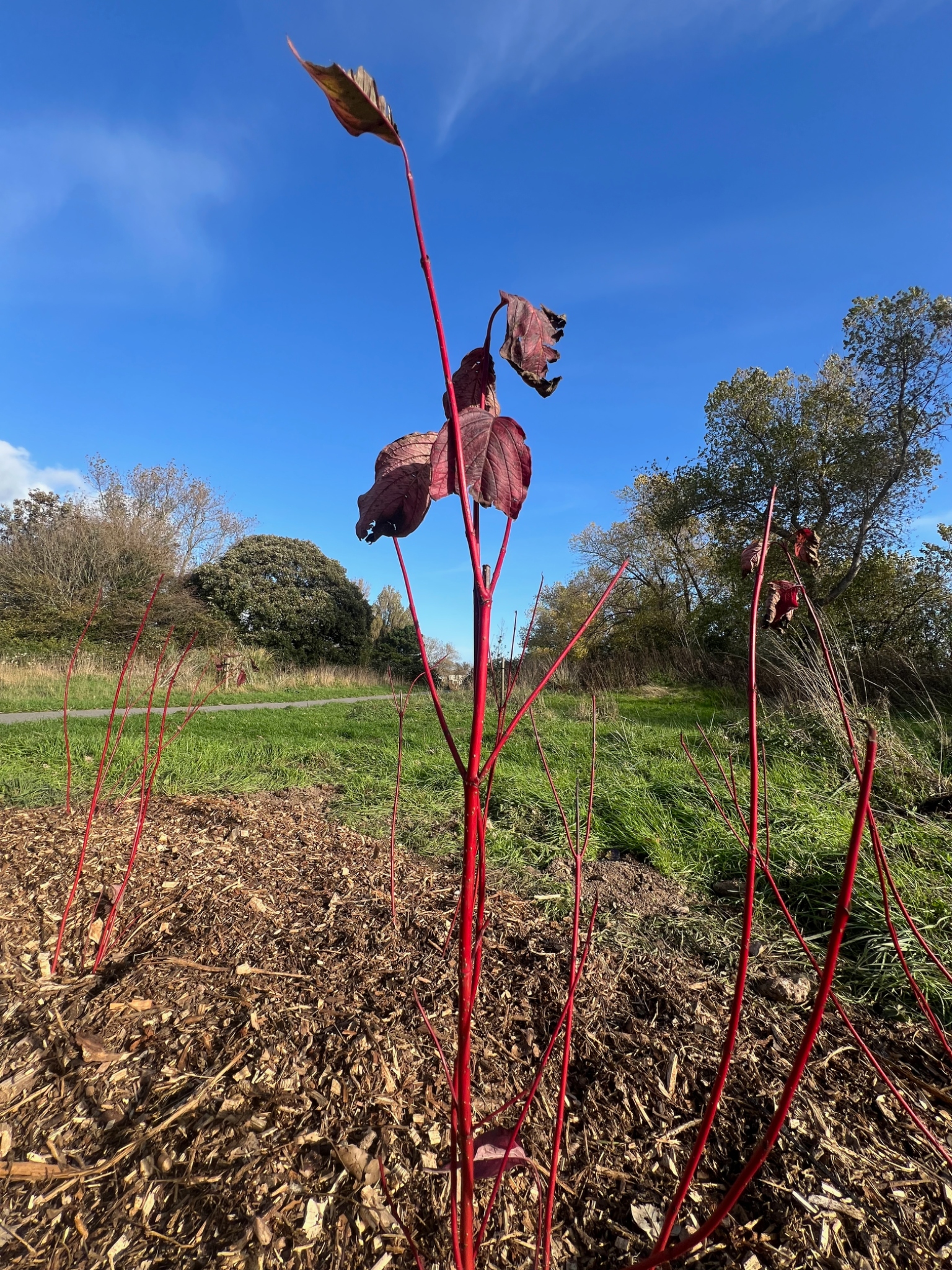
This autumn, volunteers from We Are Pollinator Pioneers CIC and Friends of Brooklands Park planted a new wildlife garden at Brooklands Park in Worthing. With support from Grow Wild, we planted 90 plants and around 1300 bulbs to create the Winter Glade, a space that will offer berries for birds, shelter among the shrubs and flowers for pollinators during the colder months and into spring.
After a long, hot and dry Sussex summer, we waited until October to plant so the young plants would have a better chance of establishing. You’ll find the new beds around the circular path near the community planters.
What we planted and why
Dogwood for winter colour and shelter
We planted four types of dogwood: red, yellow and orange-stemmed varieties, plus common dogwood (Cornus sanguinea). Once the leaves fall, the colourful stems come into their own. As the shrubs fill out, their branches will provide cover for birds and other small wildlife. Common dogwood also produces flowers visited by insects and dark berries eaten by birds.
Guelder rose for flowers, berries and cover
Guelder rose (Viburnum opulus) offers something different as the seasons change. Its white flowerheads provide nectar for insects in late spring and early summer, while its branching growth offers shelter. Clusters of bright red berries appear in autumn and can hang on into winter, providing food for birds.
Sea buckthorn for birds arriving on the coast
Sea buckthorn (Hippophae rhamnoides) produces bright orange berries that are a valuable food source for birds along the coast. They’re particularly welcome to wintering thrushes arriving from continental Europe in autumn. Its thorny branches also create sheltered cover as the shrub grows.
Stinking hellebore for winter nectar
Stinking hellebore (Helleborus foetidus) has nodding green flowers that open in winter and early spring. On milder days, when bees and other insects are active and there are few flowers around, those blooms offer a welcome source of nectar.
Common barberry for autumn berries
Common barberry (Berberis vulgaris) produces clusters of red berries in autumn, adding another source of food for birds. Its dense, thorny branches also provide cover as the shrub matures.
Flowers from winter into spring
We planted winter aconites, snowdrops, wild primroses and English bluebells to give pollinators a succession of flowers. Yellow winter aconites and white snowdrops are among the first to bloom. Wild primroses follow as spring gets underway, with English bluebells extending the display later into the season.
Come and watch the garden grow
The Winter Glade is newly planted and will take time to fill out. As the plants establish, the mix of berries, flowers and shelter will help support a wider range of wildlife at a time of year when food and cover can be scarce.
We will be adding a rain water harvesting system so we can capture rainwater and be able to water the plants during dry spring and summer months.
Next time you’re at Brooklands Park, take a stroll around the circular path near the community planters. Look for the colourful dogwood stems on winter walks, then see which flowers you can spot as spring approaches.
Thank you to Grow Wild for supporting the project and to everyone who helped with the planting.