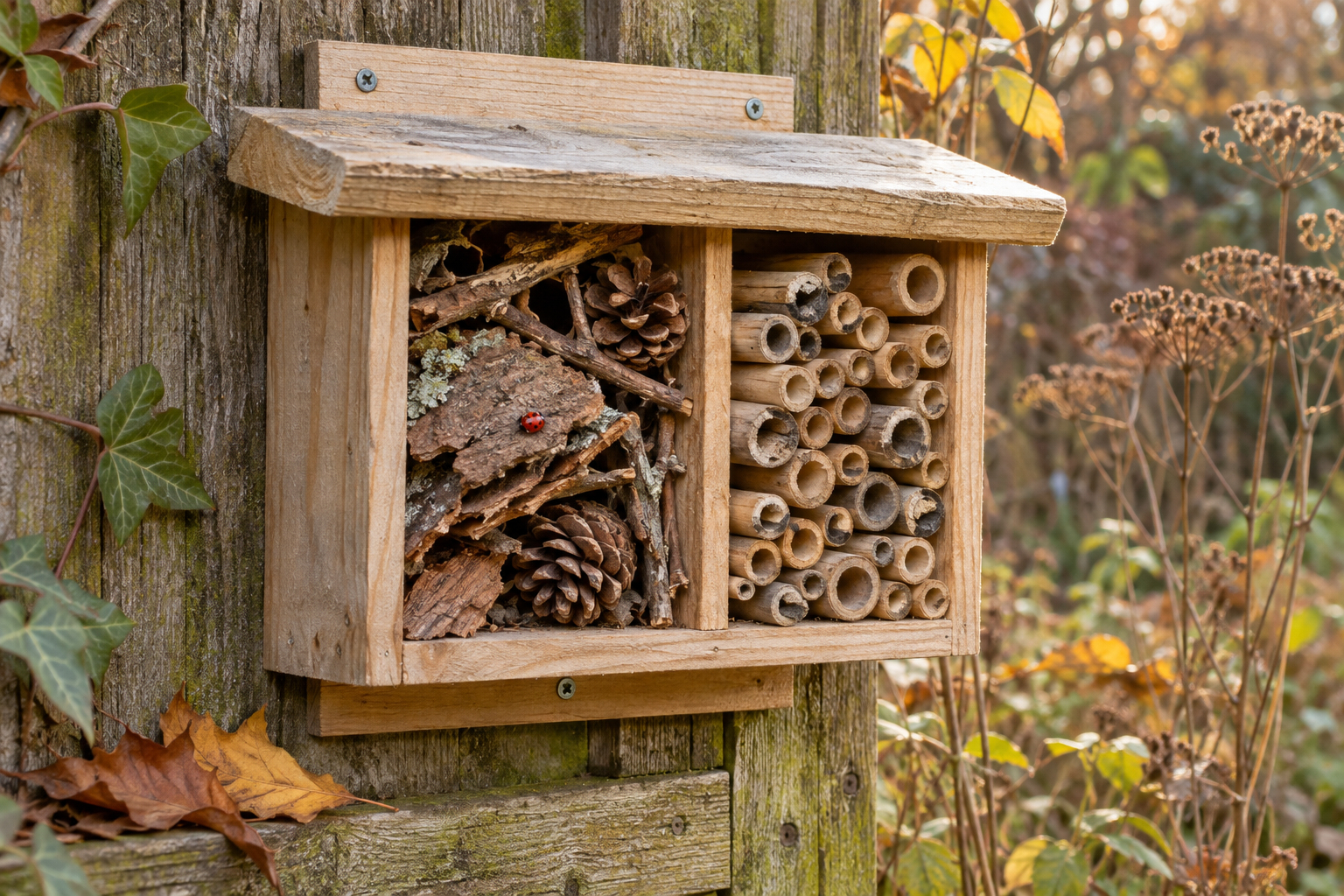
As the weather turns colder, small creatures look for dry, sheltered places to spend the winter. A gap under a piece of bark or a nook between dry stems can make a good hiding place. You can create more of these little spaces in your garden by building a simple bug hotel.
It’s a good way to use materials you might already have, such as pine cones, dry stems, pieces of bark, sticks and offcuts of untreated wood. And if you add a bundle of hollow stems, you might welcome solitary bees when the weather warms up.
How to make your bug hotel
- Choose a frame that fits your space
- A small wooden box is a good starting point. Use untreated wood and turn the box on its side so the opening faces out.
- An empty tin can is handy if you only have room for a small bundle of bee nesting tubes. Choose a clean, dry can with a smooth rim and enough depth for the stems.
- Old wooden pallets work well if you have room for a larger bug hotel. Use clean, sturdy, untreated pallets and stack them low and securely on level ground.
- Create some winter hiding places
- Tuck pieces of bark, pine cones, twigs and dry stems into your box or between the pallets. Leave small gaps where insects such as ladybirds can crawl in and shelter over winter. Add an overhanging roof or choose a spot sheltered from heavy rain to help keep the materials dry.
- Add a nesting spot for solitary bees
- Bundle smooth, hollow stems or bamboo canes, or pack them snugly into your tin can. Use a mix of widths and aim for tunnels about 10–15 cm long, open at the front and closed at the far end.
- Secure the tubes horizontally in a sunny spot sheltered from rain, about a metre above the ground. If your bug hotel is in a shady corner, fix the bundle separately to a sunnier wall or fence. From spring onwards, keep an eye out for tubes sealed with mud or little pieces of leaf. They’re clues that a solitary bee may have moved in!
See who moves in
Leave your bug hotel undisturbed over winter. When the weather warms up, watch from a little distance to see who’s visiting. A tube sealed with mud could be a sign that a mason bee has nested there, while one plugged with neatly cut pieces of leaf could be the work of a leafcutter bee. Leave sealed tubes in place so the young bees can develop and emerge in their own time.
You can make room for wildlife elsewhere in the garden too. Leave a few dry stems standing, tuck some fallen leaves under a hedge and grow flowers that offer pollen and nectar from spring into autumn.